© Thomas Gade / March 2016 (updated 2026)
Professional Tank Cleaning
You can clean an easily accessible diesel fuel tank yourself, provided you pump out the contents in compliance with environmental regulations and while observing all safety risks. However, this is often not straightforward, and not everyone has the technical skills or motivation for a DIY solution.In such cases, professional help is required. The company **MFT Mikrofiltertechnik GmbH** from Geesthacht (Germany) has an excellent reputation. The team operates mainly in Germany and other European countries and specialises in cleaning diesel tanks on boats as well as in emergency power generators and other diesel applications.

Typical diesel pest candidate: An old lifeboat converted into a cabin cruiser that was hardly used in recent years. After the sale, the new owner soon experiences engine failure – diagnosis: heavy biosludge in the tank.
How Professional Tank Cleaning Works
In principle, tank cleaning is simple: Deposits on the walls and bottom are removed, the diesel is pumped out and filtered. Biosludge forms mainly through fuel ageing and a high water content that promotes the growth of microorganisms.Many tanks do not have a drain cock, so complete emptying is necessary. Professionals suck the diesel from the bottom first, removing a large part of the biosludge in the process. The fuel is filtered during pumping.
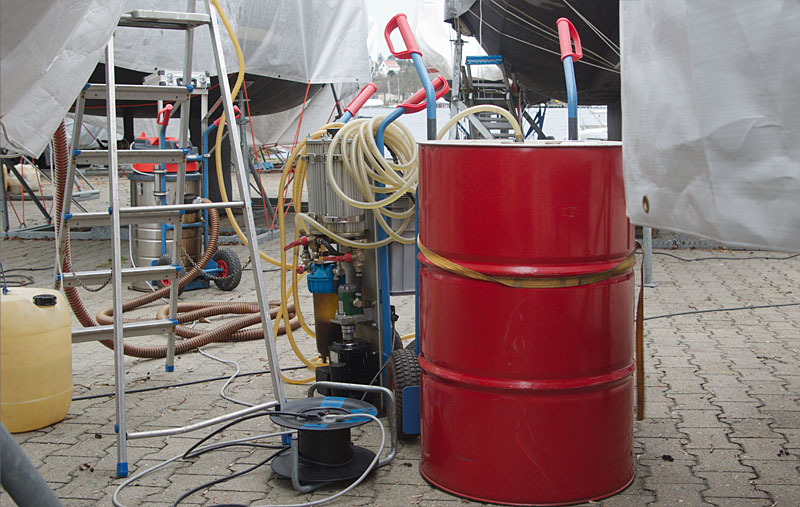
Professional equipment: Large pump, filter system and hoses.
Once the tank is empty, deposits are loosened with spatulas, rags and brushes. The interior is then thoroughly cleaned – similar to a deep household clean, only much tighter and more awkward.
The biggest problem is that many tanks are poorly accessible. In these cases, access must first be created by cutting openings into the hull or deck and installing inspection hatches. Suitable screw-on covers are available in the trade that allow easy future inspections and cleaning.
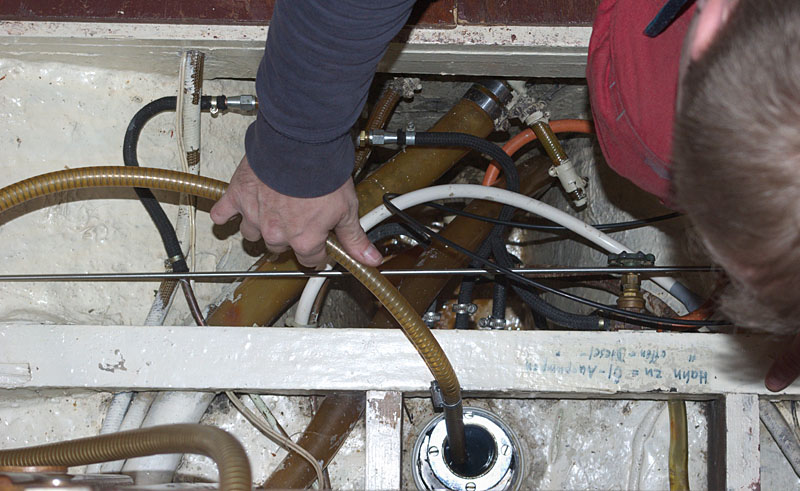
Tank in the boat bilge – pumping out the diesel.
MFT uses powerful industrial pumps and long hoses, so boats can remain in the water while the pump is on the pontoon or ashore. A thin guide tube allows the entire tank bottom to be reached systematically. A powerful wet vacuum cleaner is then used to remove the remaining sludge.
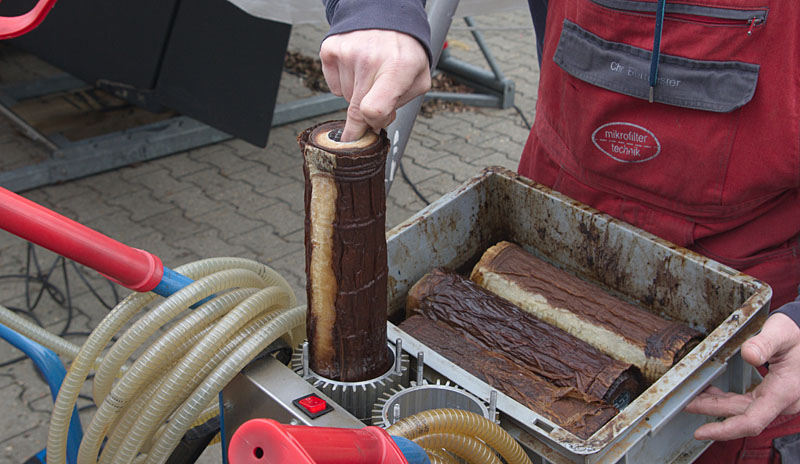
Replacement of heavily contaminated micro-filters.
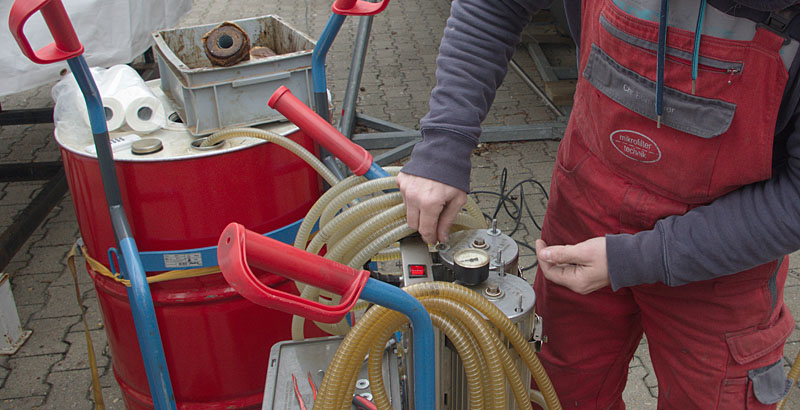
Collection tank and filter system for the diesel.
The fuel is filtered and can be pumped back into the tank after cleaning. The filter inserts are replaced to ensure the cleanest possible diesel.
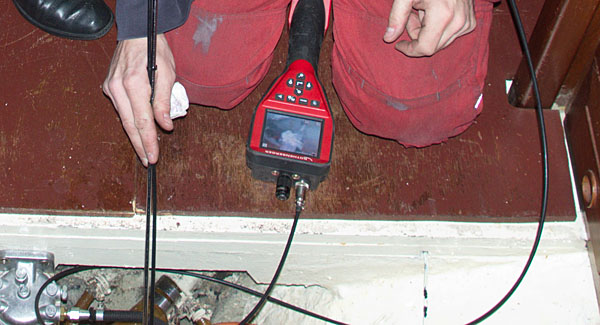
Visual inspection with the endoscope.
Documentation with Smartphone Photos
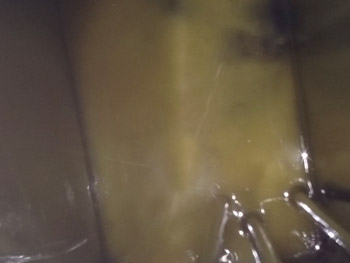
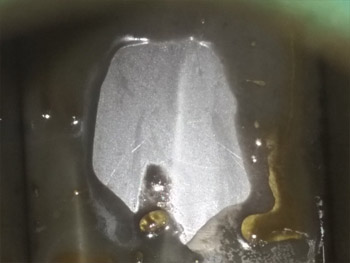
Smartphone photos taken through the small tank opening: Left – tank bottom covered with biosludge. Right – after initial suction, the clean tank bottom becomes visible. This allows customers to see the progress of the work directly.
Is the Filtered Diesel Still Usable?
The returned fuel is not sterile and may be affected by ageing. MFT offers to treat it with a biocide (e.g. Grotamar) to make it uninhabitable for microorganisms. If the boat owner has already added another additive, this should be mentioned in advance, as incompatibilities may occur.The cleaned and returned diesel should be used up soon. Alternatively, it can be disposed of via a haulage company, where it is consumed quickly – unlike on boats with very low annual consumption.
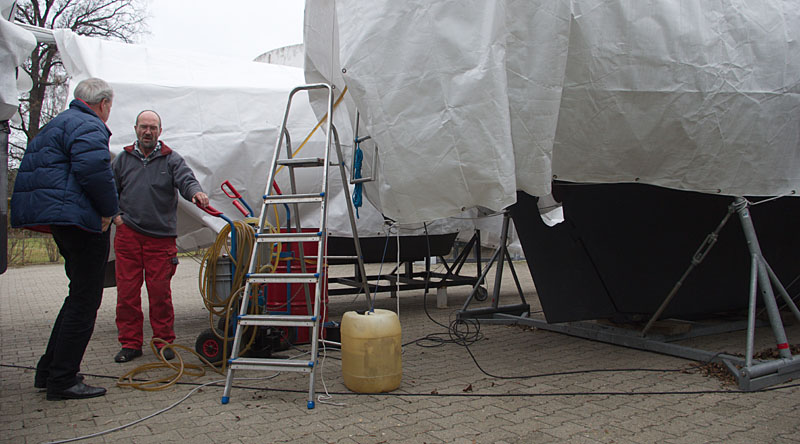
Winter is the ideal time for tank cleaning – boats are already on land.
Conventional diesel with a biodiesel component is not suitable for long storage periods. Many therefore recommend Aral Ultimate or Shell V-Power, which contain only a very small proportion of rapidly ageing biodiesel.
Tank Cleaning Before Switching to C.A.R.E. Diesel
Even better is the modern **C.A.R.E. Diesel** (NExBTL). It is more stable, burns cleaner and is significantly less prone to diesel pest.Anyone wanting to switch to C.A.R.E. Diesel should have the tank thoroughly cleaned beforehand. Reports suggest that the new fuel can loosen old deposits, which may then enter the fuel line to the engine and cause problems.
How to Order a Tank Cleaning
MFT is present at boat shows, recommended in watersports magazines and benefits from word-of-mouth. Since the team has to travel, it makes sense to bundle orders regionally. Many cleanings take place in winter when boats are on land anyway.MFT collects enquiries and organises the operations from the office. Travel costs can be shared among several customers.
If you experience an engine failure on a diesel-powered boat due to contaminated fuel, you should have the tank inspected. Anyone who uses little diesel and has long storage periods is particularly at risk. Without timely action, diesel pest can ruin the entire season.

Biosludge settles under the diesel after some time.
Cost of Professional Tank Cleaning
The cost depends heavily on the individual case (accessibility, tank size, need for new inspection hatches). For sport boats up to about 10 m in length, you should expect costs starting from around €400 plus travel expenses. This may sound expensive at first, but it is reasonable in relation to the overall costs of a boat. Moreover, it is a maintenance task that is usually only necessary every few years.The first time can be more expensive if inspection hatches have to be installed, but these make all future inspections and cleanings much easier.
International Service Providers
MFT Mikrofiltertechnik GmbH operates primarily in Germany and other European countries.Comparable professional diesel tank cleaning services are also available in:
• **United Kingdom**: Clean Fuel Marine, JC Fuel Polishing Services, LV Fuel Services
• **USA**: Fueltec Systems, Clean Diesel Company, Absolute Tank Cleaning, SunCoast Tanks